


The crowdsourcing aspect of the BeeUp approach addresses a conflict for growth-seeking organisations: on the one hand, the BeeUp client intends to gain creative solutions and identify hidden talent. On the other hand, it wants to avoid publicly disclosing confidential information. The BeeUp approach addresses this conflict statically as well as dynamically.
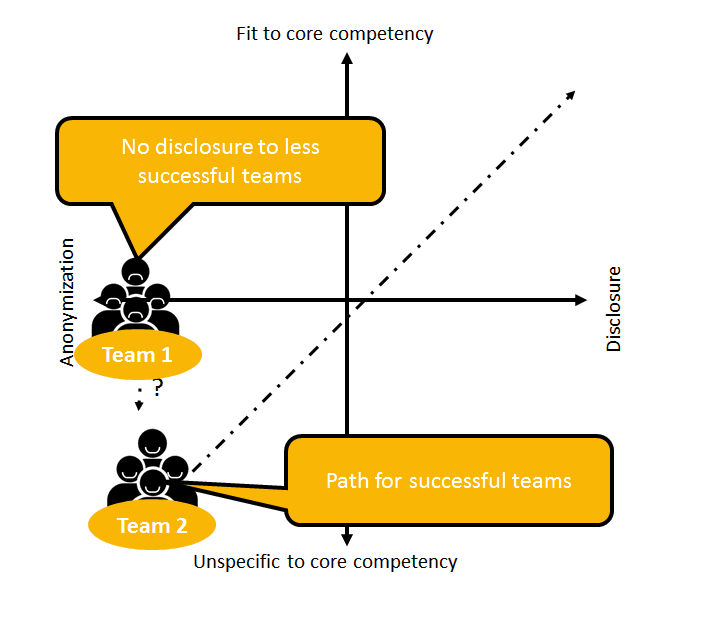
Statically: Case studies are described in a way that ensures they contain only a minimum of identifying information – not enough to solve a BeeUp client’s case to its full possible extent. The case study description is intended to provide the user with a story containing a general impression of a specific issue as well as the cultural context of the organisation. On the basis of this generalised case study description, users are free to decide whether or not they want to tackle that case. If a user then decides to take on the case, they can receive additional information by questioning the BeeUp coach, who then refers back to the client (also refer to the next item).
Dynamically: “Those who give a lot will get a lot“. In this sense, BeeUp teams that contribute a lot will receive more confidential information. In the first instance, the BeeUp coach will provide the BeeUp team with basic client information. In case of any doubt, the BeeUp coach can refer back to the client for necessary clarifications. This means that high-performance teams will continuously improve their solution as they gain more information. (It should be noted that each team’s solution is protected by a non-disclosure agreement.)


